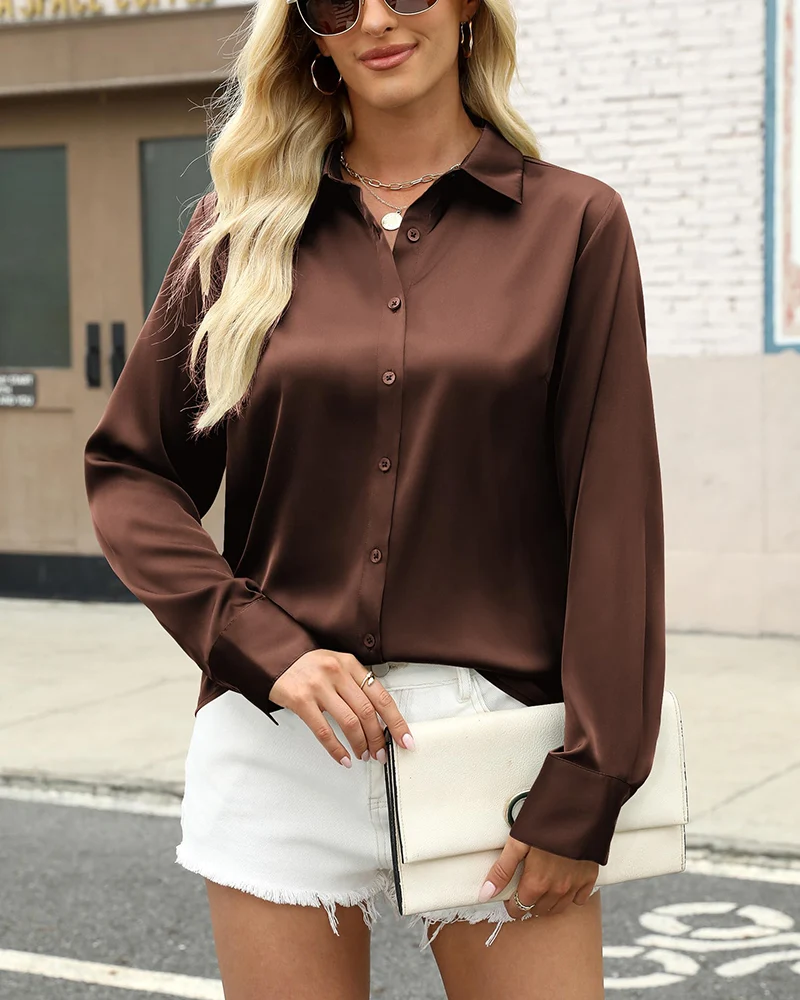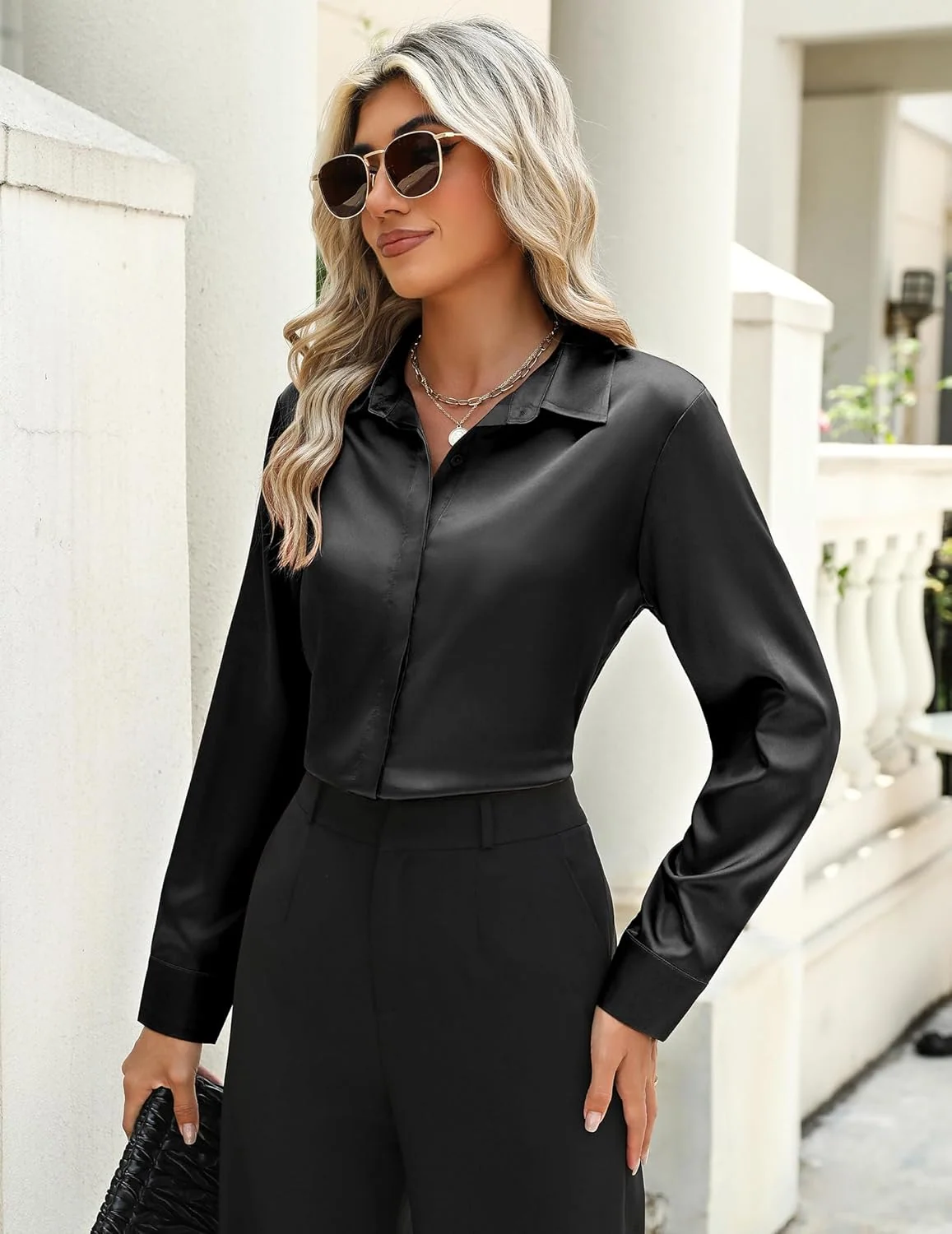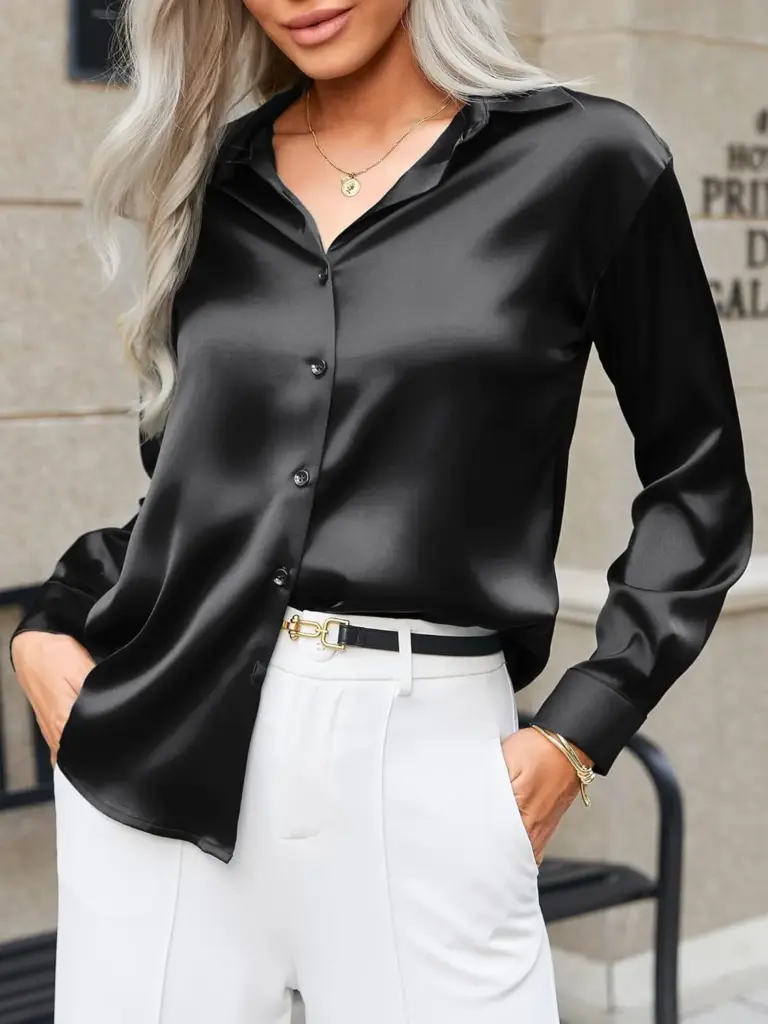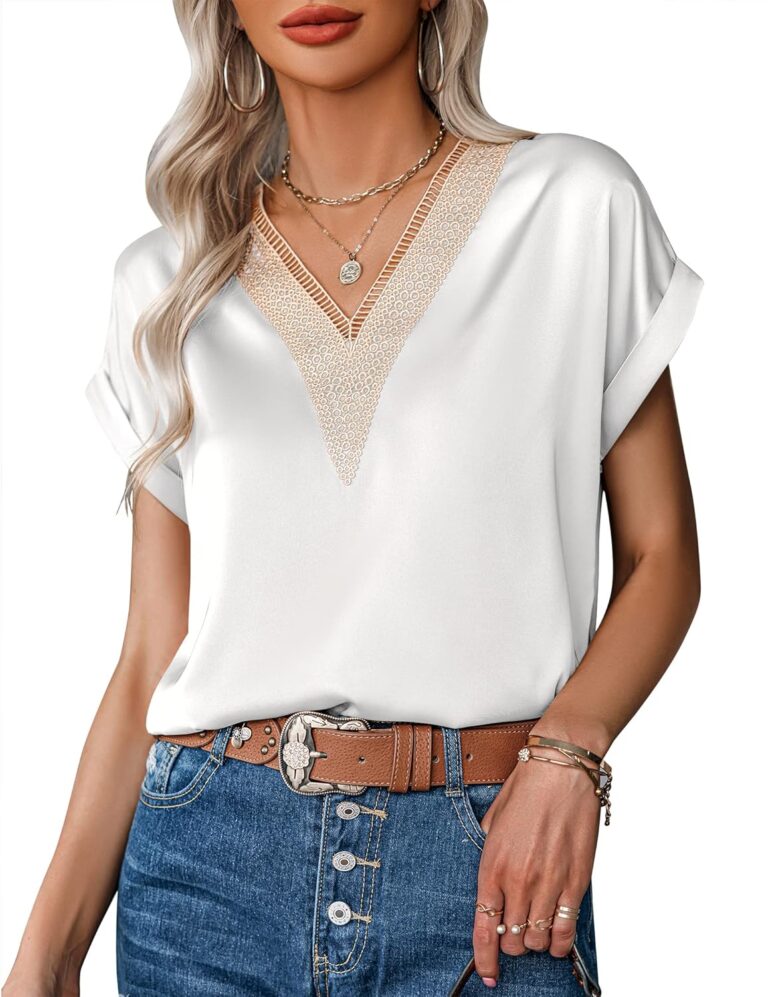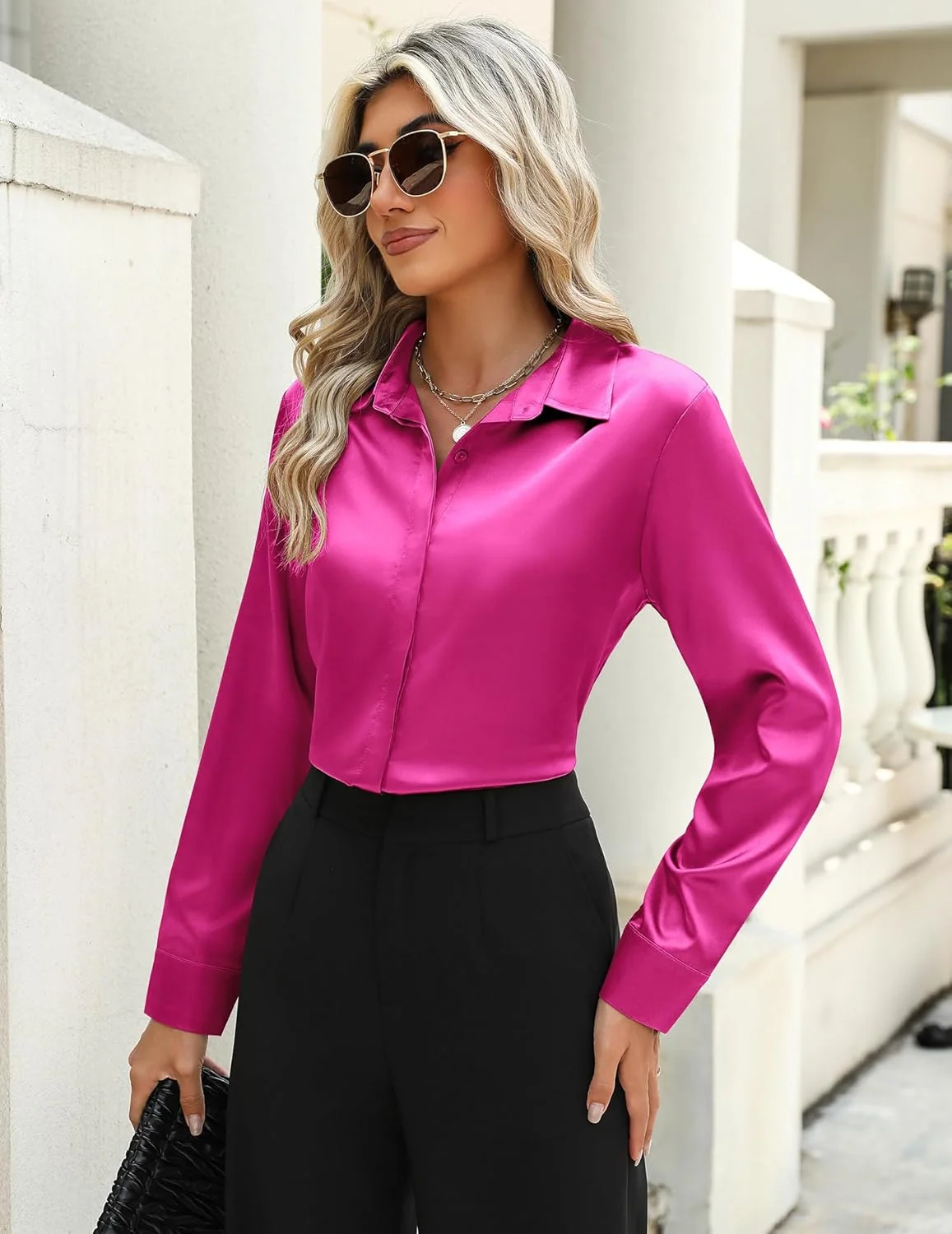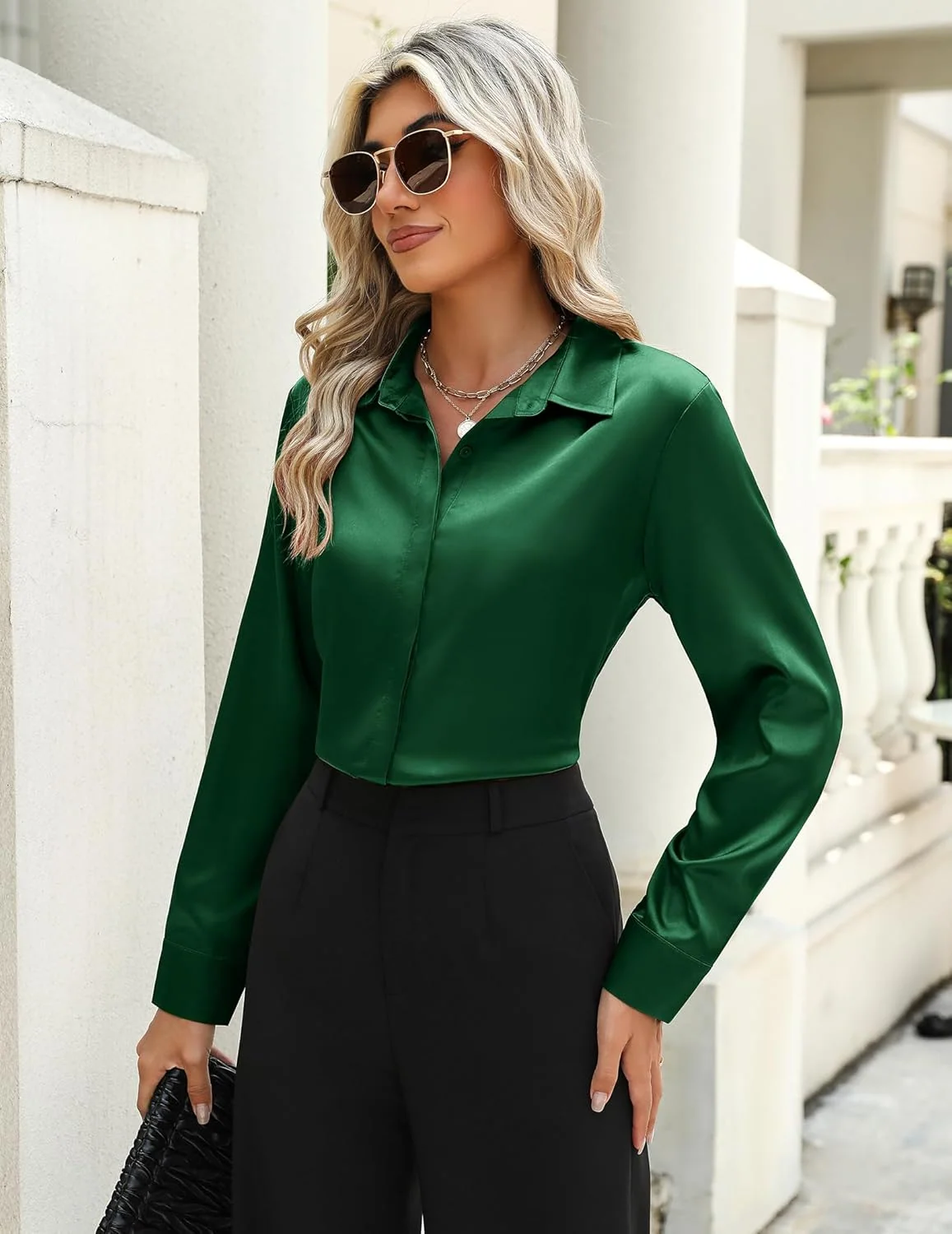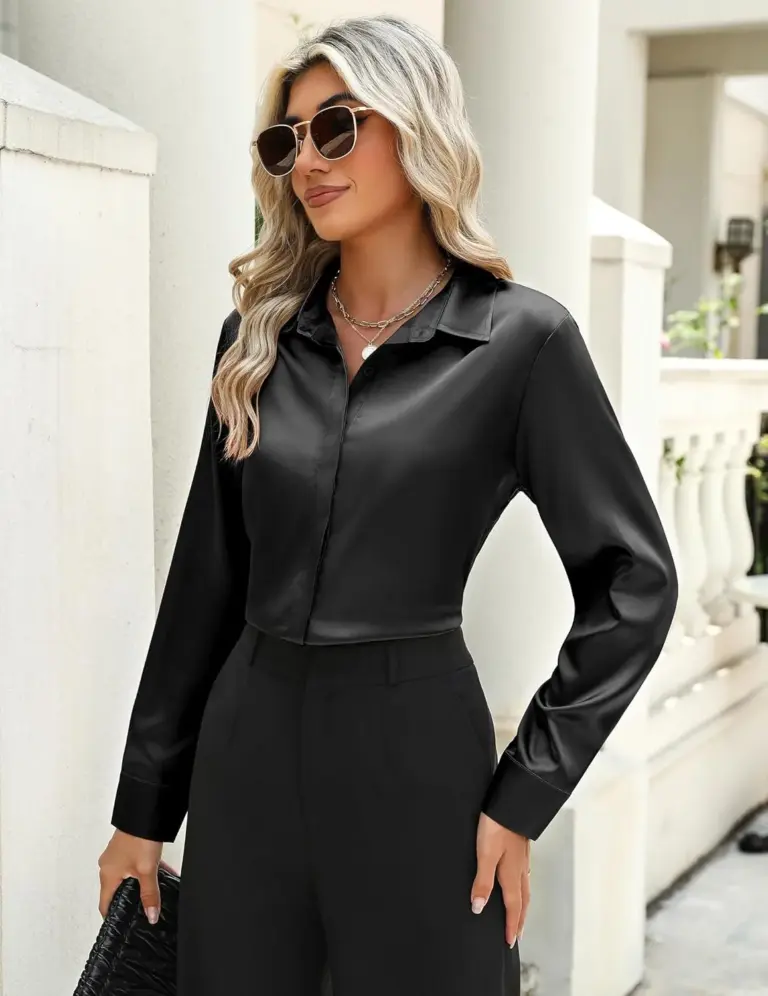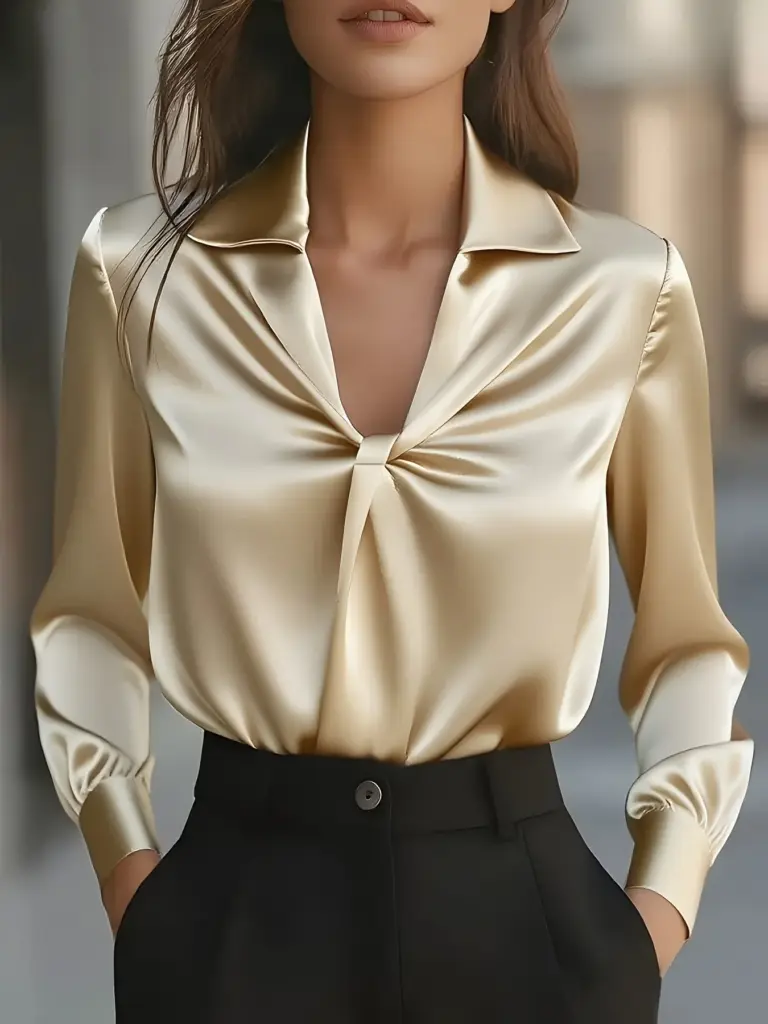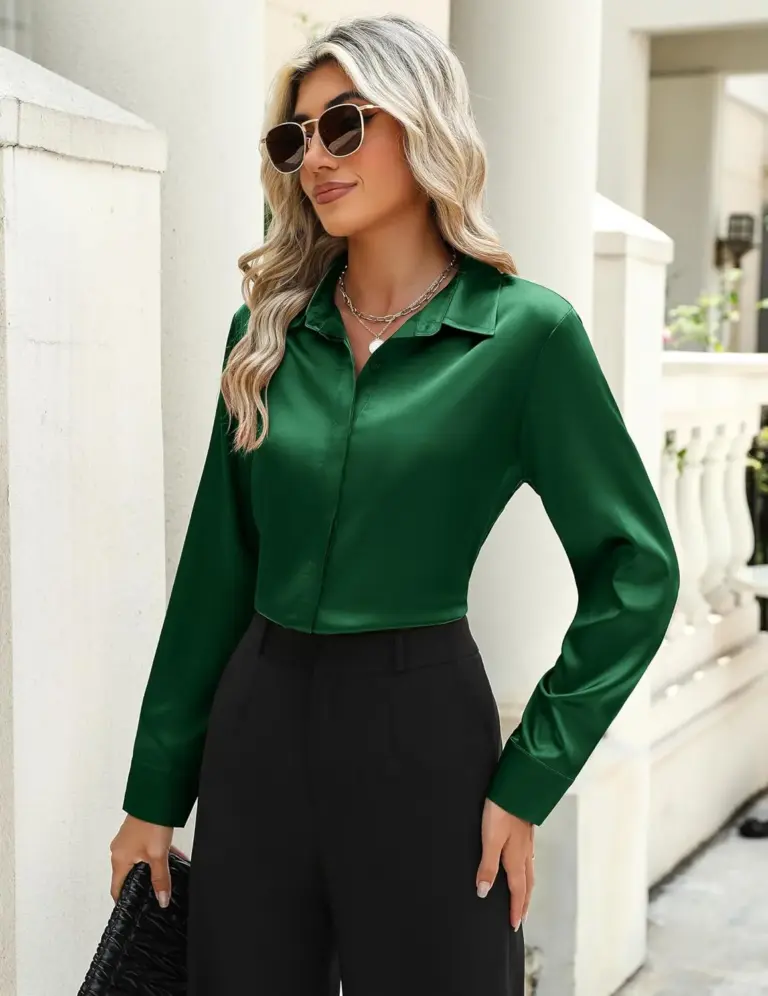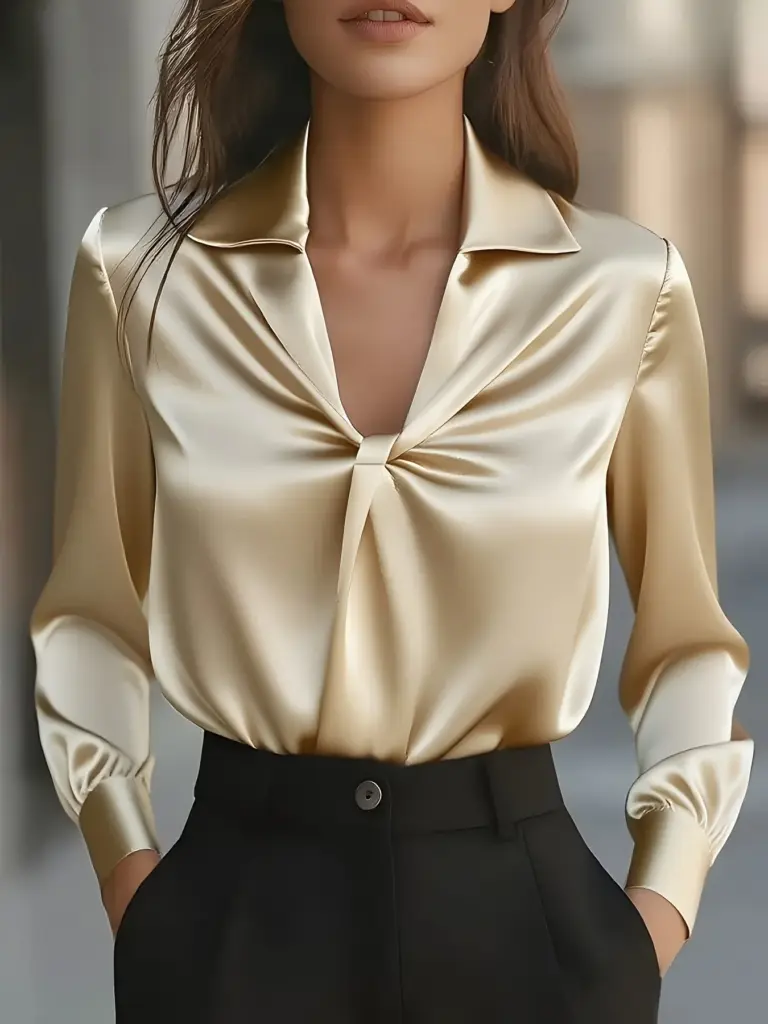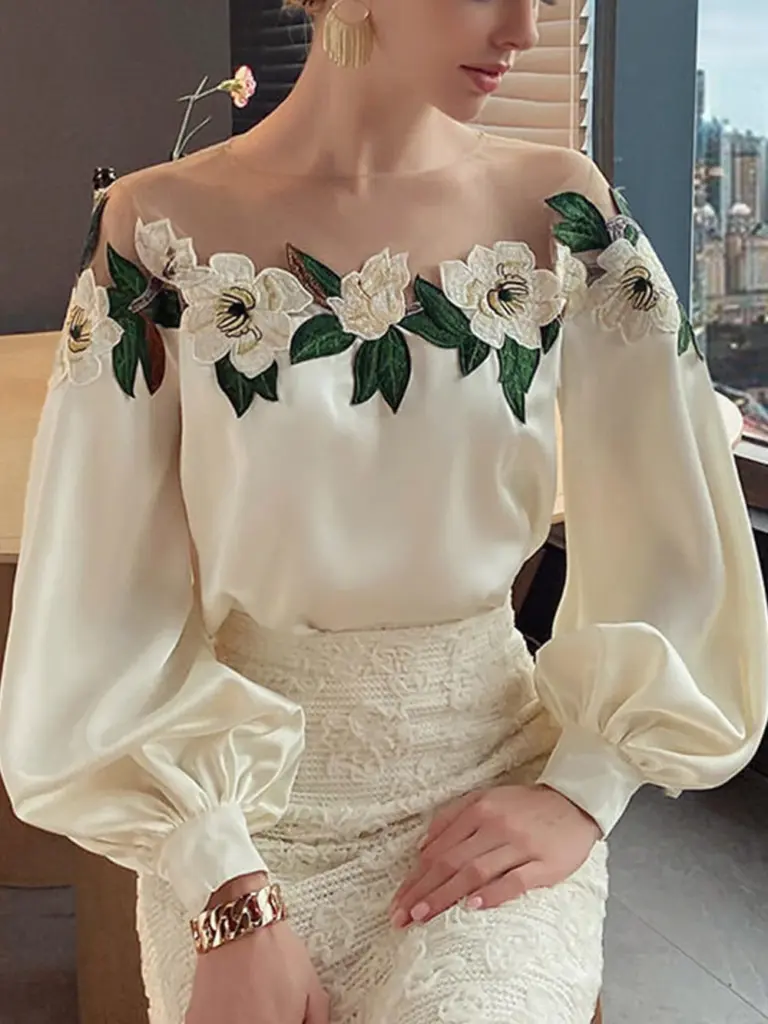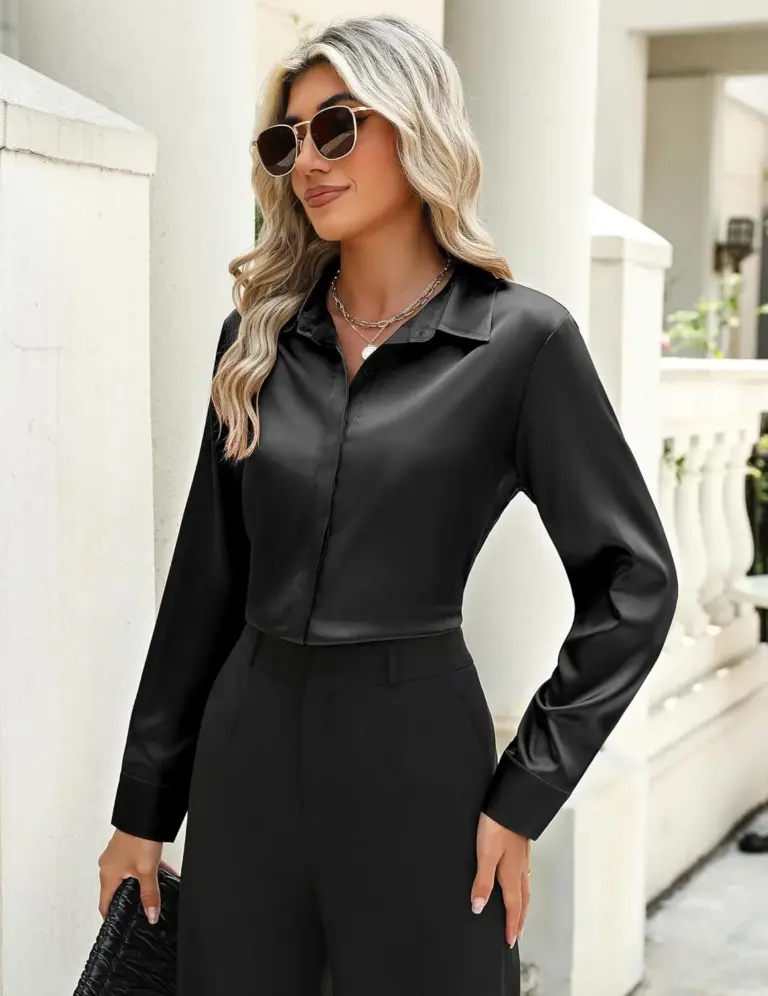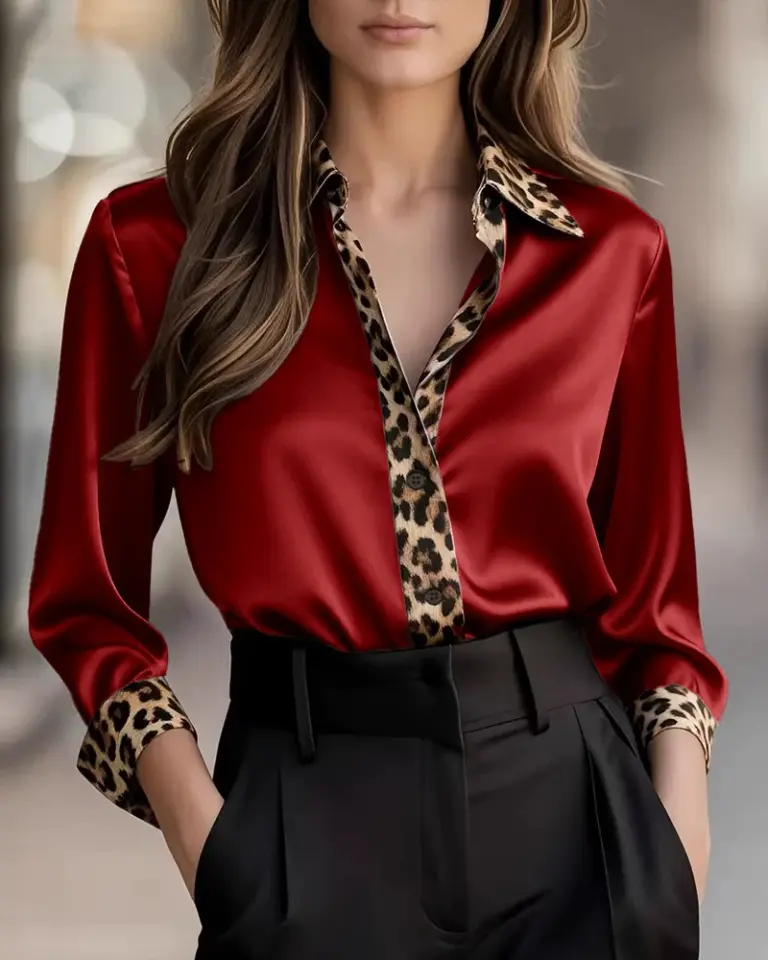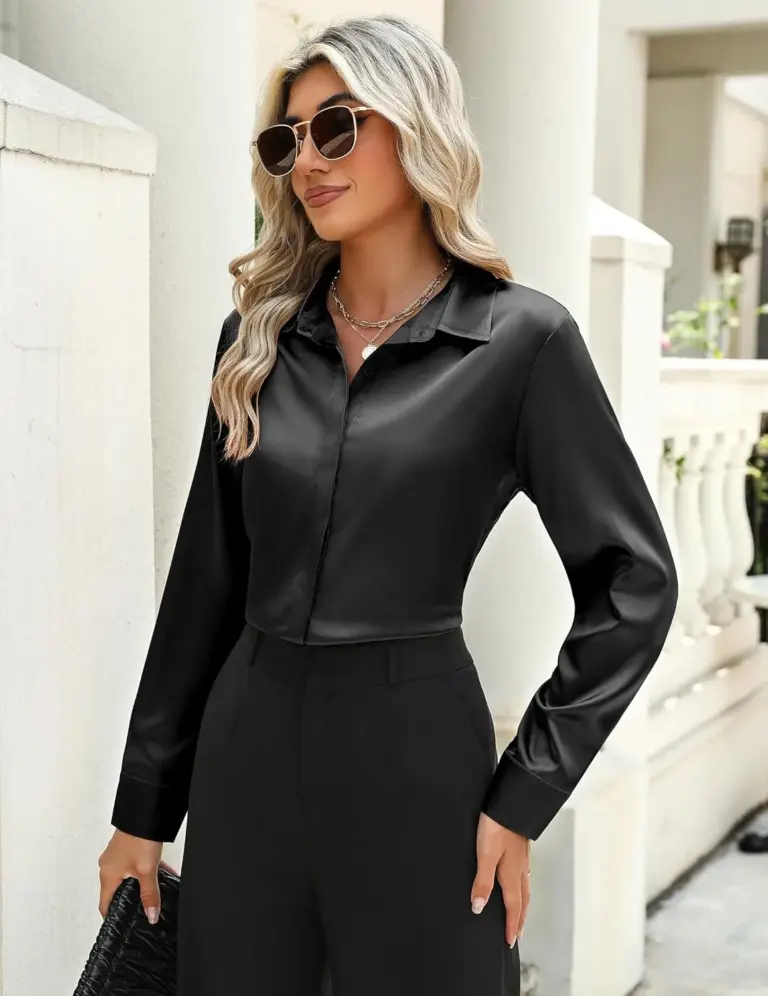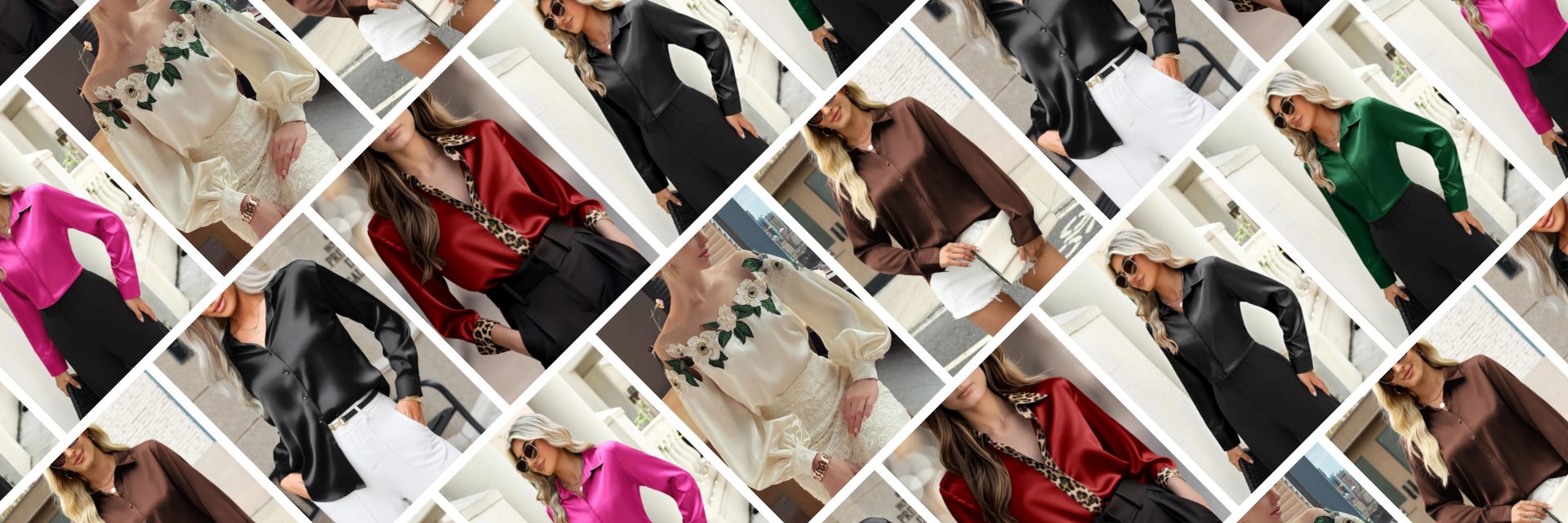
Satin shirts suit anyone who wants a blouse that looks like they made an effort without actually trying very hard, which is most of us on a Monday. They're brilliant for the person who wants one piece to dress up jeans or sit under a blazer for something that needed more thought than it got. If you sweat easily or you're after something to wear hard all day without a second thought, think twice, because satin shows damp patches and creasing in a way cotton simply doesn't, and it will remind you of this at the worst possible moment.
The honest limits are worth saying plainly. Satin is not a fabric for a long shift on your feet or a packed commute where you'll be pressed against other bodies, because it marks and clings and every crease from sitting down shows for the rest of the day. It's also not forgiving on a bra line or a vest underneath, the fabric is thin enough that seams and straps print right through, so you need to think about what goes under it as much as the shirt itself. Rain is another enemy, water sits on the surface in dark patches rather than soaking in quietly like it does on cotton.
Fit matters more with satin than with most shirts because the fabric has no texture to hide behind, so anything too tight pulls at the buttons and the gap shows a slip of skin or bra you didn't plan on sharing. Go a size up from your usual blouse fit if you're between sizes, and check the shoulders sit flat rather than straining, because satin creases sharply at any pull point and that crease stays there all day. Sleeve length matters too, a satin sleeve that's slightly too long bunches at the wrist in a way that looks accidental rather than deliberate. Try sitting down in the fitting room if you can, not just standing, since that's when the gaping at the chest usually reveals itself.
What separates a shirt worth having from one that'll annoy you within a month comes down to weight and weave as much as anything. A proper satin weave, whether it's silk, a silk and viscose mix, or a heavier polyester satin, should have some actual weight to it and a dull sheen rather than a shiny plastic glare, the cheap stuff catches light like a disco ball and creases like paper. Check the buttons are stitched through properly rather than glued, and run a finger along the seams, if they're flat and the hems sit without puckering, someone cared when they made it.
Worn and washed with any sense, a good satin shirt softens slightly over time, the sheen mellows rather than dulling, and it drapes better the more it's worn, which is the opposite of most high street buys that go downhill the moment you take the tag off.